
The Anguish of Covering a War on Your Own Country
I have learned and done only one job for as long as I can remember: journalism. But I soon realized that reporting on the war against my country of origin from my adopted country was, to put it mildly, surreal, if not draining.
Hidden Cities: I took a tumble unexpectedly one morning last winter, as I was dropping my daughter off at school on New York’s Upper West Side. It was late February, a busy sidewalk, and nobody stopped to check on me. At first, I didn’t overthink what had happened or the indifference of fellow passersby. But as someone who is always on a quest for meaning in everything, I reinterpreted the incident in the days that followed.
The next day was February 28, when the United States and Israel joined forces to launch an unprovoked war of choice against Iran that has now extended into its eighth month. As the war escalated and then dragged on, that moment of collapse one day earlier came to symbolize a burden I carried, of processing how my native country was being destroyed. It was a reckoning, I soon realized, that I had to work through alone.
When the war began, many of the former mentors, present colleagues, and friends whom I believed I’d hear from vanished from my call logs and email threads. They were either working at institutions that were being actively bullied by the Trump administration or were affiliated with organizations that had stakes in the idea of conflict with Iran. Others were simply taking precautionary measures, and of course, everyone has bills to pay.
Yet things had been quite clear to me from the day the war began—not as someone who has reported on Iran’s relations with the U.S. for nearly two decades now, but as an outside observer, and an Iranian. It was not one of those “complicated” situations where the “two sides” had to be weighed equally. Iran was in the middle of nuclear negotiations with the U.S. in February when President Donald Trump decided to flip the table and start bombing, claiming Iran posed an “imminent threat”—even though he had boasted that Iran’s nuclear facilities were “totally obliterated” in U.S. strikes just eight months earlier.
I have learned and done only one job for as long as I can remember: journalism. But I soon realized that reporting on the war against my country of origin from my adopted country was, to put it mildly, surreal, if not draining. I was never in denial, but I may not yet have fully grasped the magnitude of the catastrophe, either.
It’s not that I had taken for granted that references to the Afghanistan war or Iraq war were always supposed to remain at arm’s length, as abstractions I’d only encounter in the news. Somewhere in the back of my mind, it often echoed as preordained that unremittingly dehumanizing portrayals of Iranians, corporate media propaganda against a nation of 90 million, and the exclusion of Iranian voices from public discourse would trigger something ominous one day.
It just never occurred to me that such a senseless war, conducted in the clumsiest manner, would be the culmination of decades of hostile messaging designed to make everyone believe that Iranians were the enemy. Israeli leaders had been dreaming of this for years, and with or without a nuclear excuse, they had found someone in the Oval Office in Trump to choreograph and stage their fantasy pro bono.
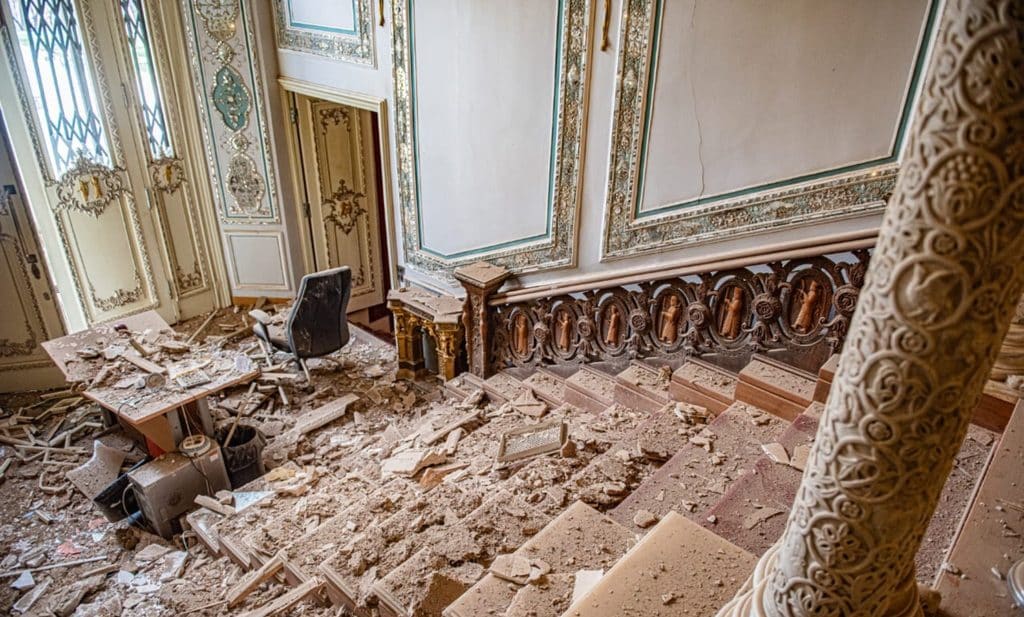
Still, I got to work, reporting on the war full-time, and as time rolled by, I tried unsuccessfully to master the art of apathy. The media industry standards dictated that I had to detach myself from the stories I was covering. The best I could do was watch the footage of homes, desalination plants, bridges, colleges, iconic bookstores, and ancient cultural sites being bombed without letting my imagination picture the traumas that the inhabitants of those spaces were enduring.
There were other visceral battles I had to fight, too. The corporate media, far from exuding the objectivity that we were often badgered in journalism school classrooms to represent, were happy to pick a side and openly chip in as ambassadors of the war project. I had to convince myself that the glamorization of warfare was part of the experience, while objectivity was merely good archival material for textbooks.
But during an unsightly show of disingenuity, it’s not easy to look away. Once a war of choice is waged without legal authorization from those who should green-light it, the door has been shut on rationality. Ideally, the media are supposed to come in and act as the providers of reason when it is in short supply. As the Persian proverb goes, “They apply salt to what is infected; what is to be done when the salt is infected?”
It was disheartening, to say the least, to follow TV programs, press conferences, and news stories that were mostly devoid of any meaningful reference to the war’s horrors being wreaked on a country that remains one of the world’s oldest civilizations. I felt the anguish not as an Iranian, but as a journalist who would be reporting on any other conflict by highlighting its human toll, not its “tactically impressive” results.
As with other comparable situations when unanswered questions give way to whataboutism, I started to wonder whether the Amiens Cathedral or Wartburg Castle could also be bombed so casually with the world looking on? I asked myself if international organizations would be so indifferent if University College London or McGill University had their research centers destroyed in airstrikes by a foreign army? If not, why wasn’t journalism up to the task?
In order to write the stories that so many other journalists were avoiding, I had to argue with editors that the assault on a sovereign nation’s territory, attacks on its civilian infrastructure, threats to send it “back to the Stone Age,” sweeping evacuation orders for cities home to millions of people, issued from thousands of miles away, and regime-change plans built around the targeting caprices of AI were important matters of public interest.
There were times when reporting on the war’s impacts—from the many incidents of civilian casualties and psychological toll on Iranian citizens to the environmental degradation caused by U.S.-Israeli bombing and extensive damage to houses of worship of minorities—thrust me into self-doubt. While everyone was so laser-focused on the price of gas and the Strait of Hormuz, was it outlandish to cover the human cost of this “Epic Fury”?
I had to thread the needle on subtle disagreements with editors and other journalist colleagues, since the corporate media frenzy had succeeded in skewing how some of us understood the origins of the war, its direction, and its impact. Reporting on some 3,500 Iranians killed under U.S. and Israeli bombardment was becoming an inconvenient fact and somehow offensive, it seemed, as if chroniclers owed an apology to those running the war machine.
Over time, I found myself gradually omitted from spaces where I could potentially use my voice to call attention to the injustices of the war. I didn’t struggle to reclaim those spaces, but I understood the winning formula for turbocharging my career overnight. I only needed to write a well-argued piece, making the case that this was a just war, that “the regime” had to be dismantled, and Israel was somehow best placed to bring freedom to Iran through this much-awaited “rescue operation,” as many in Iran’s pro-war diaspora circles call it.
If I did all that with a tinge of literary panache, I could be showered with interview requests. I could end up writing for some of the largest American publications, and maybe even get hired by one of them. I might secure attractive speaking gigs and a coveted media spotlight. All the corporate media seemed to want was a hyphenated dissident, with a byline like mine, to volunteer to heap scorn on the “mad mullahs” and tell the world that everyone in Iran was grateful for this war of emancipation.
But I didn’t make that choice. Instead, I have been desperately searching for the courage to tell basic truths in this time of universal deceit. I have been scrambling to convince press-shy victims of the war whose dreams and lives have been crushed under the rubble to talk to me so that I can share their voices with the world.
And I have been reminding myself that, as on that day before the war when I tripped and fell, I am on my own in this task. But deep down, I’m also reassured by knowing how I will feel in hindsight when the dust settles on this long stretch of endemic cruelty: I will be proud of not giving up in the face of fear.