
Iranian Academics and Students Pay the Cost of War. Higher Education Can Alleviate the Pressure.
Leaders and institutions that have expressed solidarity with Iranians can translate their words into action by empowering Iran’s academic community and extricating Iranian students and scholars from decades of involuntary isolation. Intellectual life cannot indefinitely remain constricted by sanctions, threats and wars
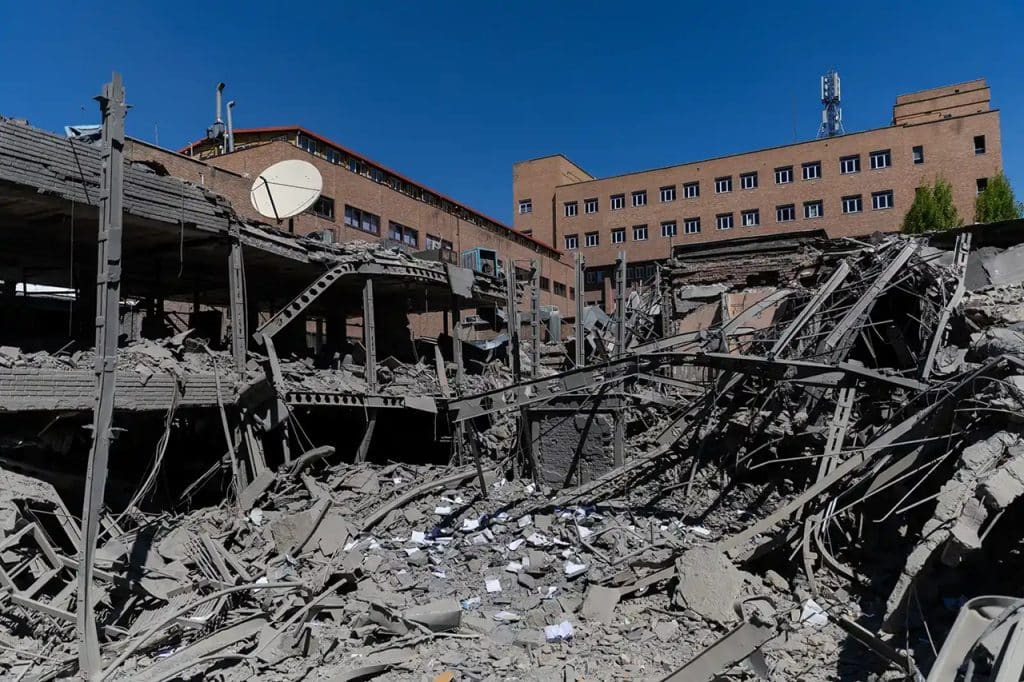
Democracy in Exile: Just as hopes grew that the U.S.-Israel war on Iran had subsided following the announcement of a memorandum of understanding, renewed military strikes, retaliatory attacks and escalating rhetoric have underscored how fragile that pause remains. As Iranians continue to live under the shadow of renewed conflict, one of the less visible but enduring consequences is the steady erosion of the country’s educational institutions.
Across 39 days of bombing by the United States and Israel, more than 30 universities and 800 research laboratories were damaged or destroyed, causing at least 4 trillion rials ($2.2 million) in damages, according to Iran’s Ministry of Science. For a sanctions-hit, cash-strapped economy, footing the bill will be daunting. Nevertheless, the physical and financial burdens of post-war reconstruction are only part of the grim reality that higher education in Iran faces today.
The military campaign came on the heels of nationwide anti-government protests that broke out on Dec. 28, 2025, in response to unprecedented economic shocks, which the Iranian authorities violently crushed. At the height of the crackdown, the government closed university campuses for 56 days, citing inclement winter weather. These successive misfortunes took a substantial toll on higher education.
Once the protests erupted, politicians and organizations around the world rushed to express their solidarity with the Iranian people, praising their democratic aspirations. Still, these displays of support have proven remarkably hollow amid the U.S.-Israel war of choice, rarely evolving from theatrics into meaningful action.
The European Union, for example, refused to adopt an official position criticizing the Minab school massacre, which the United States was likely behind. Its leaders’ indifference to the destruction of civilian and educational infrastructure has highlighted their implicit endorsement of the military aggression, communicating to millions of Iranians that there is a huge gap between their rhetorical gestures and true convictions.
Previous words of solidarity will likely remain performative. Powerful states have long expressed selective outrage through inconsistent standards in human rights advocacy that, depending on the political dividends at stake, shift their priorities and values. Rampant disparities in education, emanating from a simmering global equity and inclusion crisis, are merely an extension of this dynamic.
But now that an unnecessary war has upended much of what was recognizable of the rules-based order, the blend of hardships impacting Iran’s academic community cannot be treated as a negligible domestic problem. There are practical measures that the international community, governments committed to universal values and academic institutions with an ongoing interest in meaningful partnerships can adopt to make a difference.
These steps should be prefaced by an acknowledgment of the costs of war, sanctions and the unfavorable political climate facing Iran’s academic life, alongside the many ways Iranian scholars have enriched communities worldwide through their innovations and contributions.
Most restrictions implicating Iranian researchers in Western academia are country-specific in that they do not apply to other groups. Therefore, provisions of support and remedial actions must similarly be designed to be country-specific.
Shortly before the 1979 revolution, Iranian students represented the largest population of international students in America. Decades later, despite the absence of diplomatic ties, episodic tensions between the two countries and ongoing travel restrictions, they remain a remarkable presence.
As of 2025, more than 12,000 students of Iranian origin attended U.S. universities, placing Iran among the top 20 countries of origin for international students in the country. This number is projected to sharply decline given the travel ban introduced by U.S. President Donald Trump last June and his administration’s ongoing crackdown on higher education.
Many American universities are still grappling with the toll of the sweeping sanctions imposed on Iran in the early 2000s. They continue to maintain pages on their websites that explicitly outline what activities are permissible when working with Iranian entities and scholars. In some cases, university websites advise that personal communication with scholars in Iran is generally acceptable. That these instructions exist points to the breadth of challenges universities navigate in their interactions with Iranian partners and students, depicting a securitized environment that incentivizes over-compliance to avoid repercussions.
In more explicit cases, colleges in Europe and North America have refused admission to Iranian applicants seeking science, technology, engineering and mathematics (STEM) programs.
This year’s events have largely worsened restrictions. In the United Kingdom, according to sources that spoke on condition of anonymity to avoid possible repercussions, institutions like the University of Aberdeen and Liverpool John Moores University are not accepting applications from Iranian nationals. In Australia, universities have been warned to discontinue cooperation with researchers in Iran and other sanctioned countries.
Although Iranian enrollment in U.S. universities may be nearly impossible over the next two and a half years of the Trump administration, there are still steps that universities in countries with significant Iranian student populations, such as Canada, Britain, Australia and the EU states, can take to mitigate this precarious situation.
One such policy could be to grant extensions for admissions deadlines. State-sanctioned internet blackouts during recurring periods of instability, protests and war have deprived young Iranians of connectivity with the world. Therefore, many planning to apply to international universities have missed deadlines or failed to meet admission requirements. Flexible extensions would significantly help accommodate their exigent circumstances.
Schools could also consider waiving application and deposit fees. Last year’s protests were initially sparked by the steep devaluation of Iran’s national currency, the rial. On top of hyperinflation, Iranian citizens struggle to wire funds overseas. Due to smothering U.S. sanctions, the process typically involves intermediaries, meaning applicants can end up paying double the original amount in fees.
By considering a waiver system, higher education institutions can lessen the financial hardships impacting prospective students. A $75 application fee equals a manual laborer’s income for one month in a small Iranian town. A college that charges a $1,000 deposit fee to secure placement, therefore, shuts its doors to Iranian applicants, even if unintended. Considering current exchange rates, this sum equals the annual salary of an early-career Iranian teacher.
The role of scholarships in alleviating the current emergency cannot be underestimated. Universities that have rightly supported the academic ambitions of students from Afghanistan, Syria and Ukraine must take similar measures for Iranian students. Almost every Iranian higher education applicant would echo the same sentiment: Without a partial or full scholarship, it would be impossible for them to study abroad. Even if they could afford their expenses two years ago, their savings have now been halved.
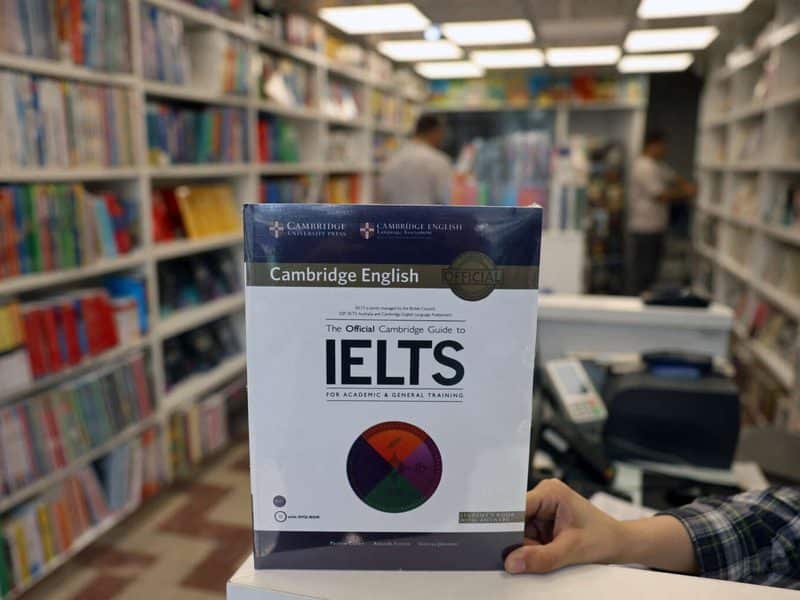
Finally, schools should consider recruiting experts on Iran in admissions offices and academic departments to address disparities that other demographics do not face. For instance, the International Development Program (IDP), which had long partnered with Iran to administer the International English Language Testing System (IELTS) exam required for most international students, shuttered its Iran operations in January. Now, to sit for a certified language test, Iranian applicants must travel to a third country. It is imperative to establish new arrangements between universities, governments and international institutions to restore basic academic functions like this test.
Leaders and institutions that have expressed solidarity with Iranians can translate their words into action by empowering Iran’s academic community and extricating Iranian students and scholars from decades of involuntary isolation. Intellectual life cannot indefinitely remain constricted by sanctions, threats and wars. Humanity will benefit when knowledge is allowed to thrive across borders for all, including Iranians.
Related Articles
No English Test for You: Trump’s Campaign Against Iran Now Targets Education
The U.S. government’s economic offensive against Iran is blocking Iranian students and applicants of higher education programs from sitting for tests of English proficiency, further weakening the country’s civil society

Western travelers explore an Iran not shown by the media
A growing number of international travelers are venturing to visit Iran despite the security and economic challenges surrounding the country. After decades of misleading corporate media portrayals, millennial critical thinkers are less willing to accept misrepresentations of Iranians driven by geopolitical rivalries

People in Southern Iran Struggle to Repair After US Attacks on Infrastructure
As Iranians come to grips with the reality of life under lingering threats by the United States and Israel, southern Iran’s strained resources may fail to withstand a naval blockade, increasing water stress, electricity blackouts, and disrupted livelihoods that were dependent on coastal trade.