
Iran’s tipped top diplomat no friend of US, Israel or JCPOA
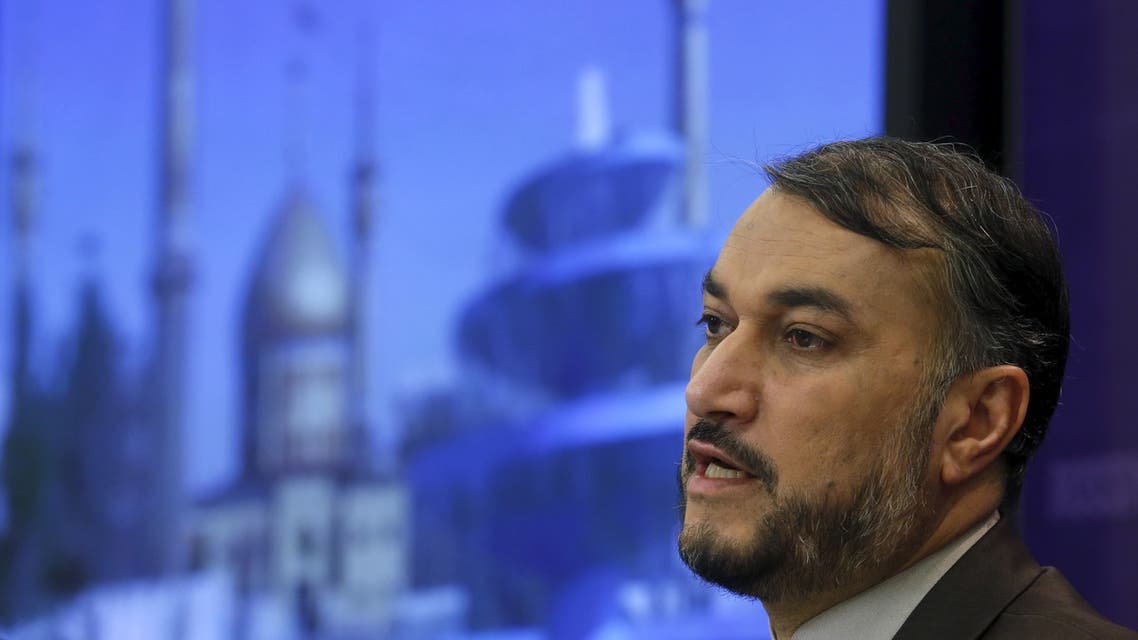
Kourosh Ziabari – Asia Times: With new Iranian President Ebrahim Raisi’s official inauguration, all eyes have turned to his likely pick as foreign minister and the candidate’s view of the Joint Comprehensive Plan of Action (JCPOA) nuclear deal that now hangs in the diplomatic balance.
The parliament, or Majlis, says the new cabinet line-up will be revealed early this week. It is widely anticipated that religious traditionalists and hardliners will sweep the board in filling the vacancies.
The early conjecture was that Ali Bagheri, a Raisi colleague at the judiciary as the Vice-Chief Justice for International Affairs and a former nuclear negotiator under hardline president Mahmoud Ahmadinejad, would get the nod.
However, sources close to the new president and local media say Hossein Amir-Abdollahian, a career diplomat and special aide to the Speaker of the Parliament, will be proposed as the nation’s top diplomat.
Amir-Abdollahian shouldn’t expect any major stumbling blocks in securing a unanimous vote of confidence at the Majlis, given his demonstrated fidelity to the Supreme Leader and credentials as a conservative diplomat with anti-Western views – qualifications the hardline-dominated Majlis relies on to measure the eligibility of new administration officials.
The former ambassador to Bahrain was deputy foreign minister for Arab and African affairs between 2011 and 2016, which means his career at the ministry straddles the Ahmadinejad and Hassan Rouhani administrations.
In June 2016, and while his boss Javad Zarif was negotiating the JCPOA with the Obama administration, Amir-Abdollahian was sacked to the chagrin of parliament hardliners, the Islamic Revolutionary Guard Corps and some within the ministry.
All believed he was a “revolutionary” diplomat committed to the Islamic Republic’s extraterritorial ambitions in Iraq, Lebanon, Syria, Yemen and the cause of Palestine.
His dismissal was reportedly ordered by Rouhani, who was laboring to ease tensions with Saudi Arabia through intermediaries in the neighborhood but found Amir-Abdollahian’s orthodox and unbending regional stance a spanner in the works of rapprochement with Riyadh.
The 57-year-old diplomat received his doctorate in international relations from the University of Tehran.
From 1997 to 2001, he was an expert and deputy head of mission at Iran’s embassy in Baghdad. He was promoted to deputy director-general of Persian Gulf affairs at the ministry and in 2007 was assigned to the Bahrain post.
An outspoken detractor of Israel and an ardent advocate of Palestine, he chairs the permanent secretariat of the International Conference on Palestinian Intifada hosted by Iran’s parliament.
In a tweet on May 6 on his personal account, one day before “International Quds Day,” he wrote, “we only recognize one country whose name is Palestine, and its capital is called al-Quds. Indubitably, the fake Israeli regime does not have any place in the future of the region.”
Amir-Abdollahian is reputed to be intimately familiar with the politics of the Middle East and Arab world. His expected appointment signals that the Raisi administration will likely prioritize ties with Iran’s immediate neighbors and Arab states rather than investing in relations with Europe or giving a facelift to fraught relations with the United States, which the Rouhani administration sought.
However, it is far from clear if the Sunni Arab kingdoms will harmonize with him considering his track record of upholding militias in Iraq and Lebanon and his unequivocal endorsement of Syrian President Bashar al-Assad, a bete noire in many Arab capitals and eschewed by most of the world.
Related Articles
No English Test for You: Trump’s Campaign Against Iran Now Targets Education
The U.S. government’s economic offensive against Iran is blocking Iranian students and applicants of higher education programs from sitting for tests of English proficiency, further weakening the country’s civil society

Western travelers explore an Iran not shown by the media
A growing number of international travelers are venturing to visit Iran despite the security and economic challenges surrounding the country. After decades of misleading corporate media portrayals, millennial critical thinkers are less willing to accept misrepresentations of Iranians driven by geopolitical rivalries

People in Southern Iran Struggle to Repair After US Attacks on Infrastructure
As Iranians come to grips with the reality of life under lingering threats by the United States and Israel, southern Iran’s strained resources may fail to withstand a naval blockade, increasing water stress, electricity blackouts, and disrupted livelihoods that were dependent on coastal trade.