
US and Israel Claimed to Be Fighting for Iranian Minorities — While Bombing Them
Two major churches, a 68-year-old synagogue, and a historic neighborhood in Tehran that hosts a large community of Iranian-Armenians were among the casualties of 39 days of US-Israeli war of aggression on Iran, which has cost the US taxpayers, on average, $2 billion per day.
Truthout: Iranians of all stripes have been affected by the U.S.-Israeli war on their country, and the civilian cost of the conflict has yet to be fully understood. The United Nations Development Programme has raised the alarm about the “development in reverse” pushing more than 32 million people back into poverty globally, and economists have warned that 10 to 12 million Iranians, representing nearly half of the country’s workforce, are now on the brink of unemployment.
But the effect of the U.S.-Israeli aggression on Iran’s religious minorities has received comparatively little attention. Beset by years of neglect and underrepresentation at home, faith groups are now coming to grips with the cruelty of war and the devastation it has inflicted on their vulnerable institutions and houses of worship.
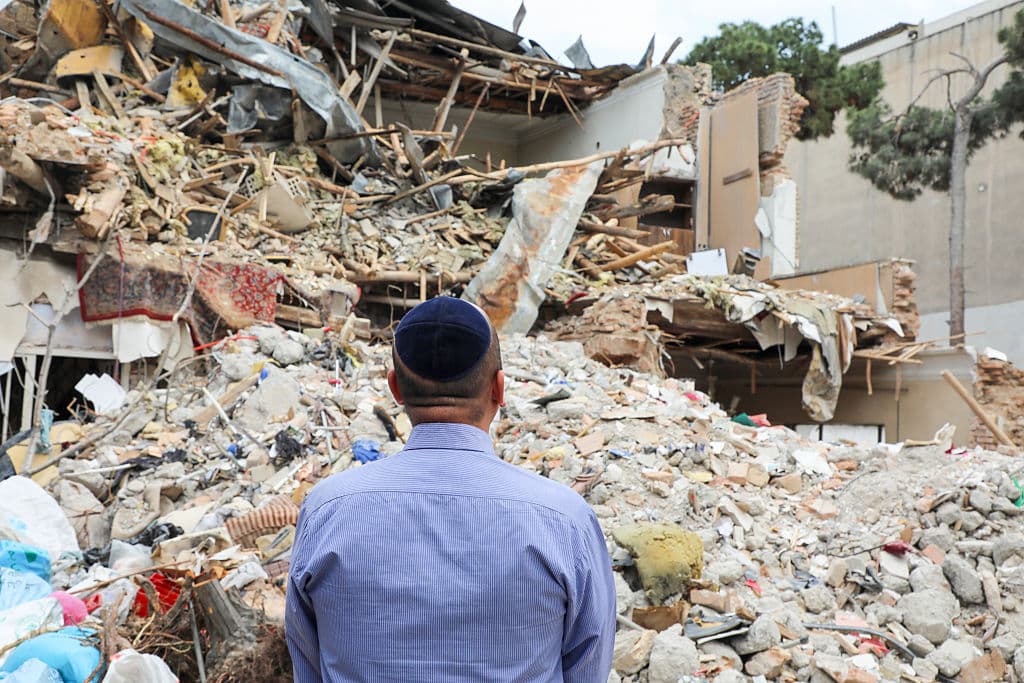
In Tehran, U.S.-Israeli airstrikes damaged two major churches, St. Nicholas Orthodox Church and the Greek Orthodox Church of Saint Mary, drawing condemnation from Tehran’s Christian communities. Although there have not been many updates on the status of the Church of Saint Mary, St. Nicholas Church, which is a major Russian cultural site in Iran, was reportedly closed on Easter due to the extent of the damages.
One day before the U.S.-Iran ceasefire went into effect on April 8, a 68-year-old synagogue in the Iranian capital was damaged in airstrikes for which the Israeli military claimed responsibility. The Israeli military said it was trying to target a military commander living nearby and regretted the destruction, which it referred to as “collateral damage.”
The attack put further strain on Iranian Jews as they navigate the challenges of a war waged by the United States and Israel under the pretenses of bringing liberation to the country. Iranian Jewish politicians and community leaders have been vocal in criticizing the attacks targeting houses of worship and civilian sites.
“Our holy books were buried under the rubble, burnt, and torn, and all of this is an indication of the indifference of the Zionist regime to Judaism as a religion and the instructions of Prophet Moses,” said Homayoun Sameh, a Jewish member of parliament as he talked to reporters in Tehran. Truthout reached out to his office for comment but didn’t hear back.
Lior Sternfeld, a scholar of Jewish studies and history at Pennsylvania State University, told Truthout that Israel has long demonstrated disregard for Jewish life and heritage in the Middle East outside of Israel, a pattern which is now stretching to Iran.
“There are credible reports on Israeli involvement in several attacks on Jewish establishments in Iraq in the early 1950s to speed up the process of Jews registering for departure,” Sternfeld told Truthout. “A couple of years later, Israeli agencies knowingly operated a small network of poorly trained Jewish spies, in what came to be known as Operation Susannah,” with the intent of attacking civilian targets in Egypt and falsely blaming the attacks on local forces.
“In 1982, the IDF [Israel Defense Forces] shelled the Maghen Abraham Synagogue in Beirut, claiming there were PLO [Palestine Liberation Organization] militants it was targeting nearby,” he added, noting that the recent synagogue strike in Tehran appears as an extension of this history.
Beyond religious and cultural sites, residential areas populated by Iran’s ethnic minorities were also attacked. On March 10, the historic Majidieh neighborhood in eastern Tehran, a major hub for Iran’s Armenian community in the capital, was bombed by the United States and Israel, destroying multiple buildings, including a locally run kindergarten.
Two days earlier, airstrikes on Lorestan Province substantially damaged the 1,800-year-old Falak-ol-Aflak Castle in the city of Khorramabad, a fortress built during the rule of the Sasanian Empire, when Zoroastrianism was the main religion. The attack was one example of the U.S.-Israeli aggression that many Iranians, including Zoroastrians, considered to be an assault on their identity and heritage.
Hossein Dabbagh, a scholar of philosophy and religion at Northeastern University London, told Truthout that attacks on houses of worship and cultural assets communicate the message of moral indifference and a “profound contradiction” in Donald Trump and Benjamin Netanyahu’s rhetoric of support for the Iranian people in the initial launch of the war.
“Even if the attackers describe a synagogue or another house of worship as collateral damage, the message received is that they do not care enough about the lives, memory, and sacred spaces of these communities,” said Dabbagh. “A campaign cannot plausibly speak in the language of liberation while erasing the fragile material, social, and political conditions that allow pluralism to survive.”
On March 26, Iranian media reported the killing of Avanes Simonyan, a 68-year-old plumbing and welding worker who lost his life in airstrikes on an industrial estate in the city of Isfahan, where a vibrant Christian population lives. Exalted by the local press as the “first Christian martyr” of the war, he was laid to rest at St. Mary Armenian Apostolic Church in a funeral attended by a large crowd.
There are no definitive statistics on the population of Iranian Armenians, and different sources have published varying figures. A Massachusetts-based Armenian publication recently estimated that Iranian Armenians number between 100,000 and 150,000, largely concentrated in Tehran and Isfahan. Even one casualty for this tight-knit community is a great loss.
George Meneshian, a policy analyst specializing in the Armenian diaspora and the head of the Middle East Research Group at the Athens-based Institute of International Relations, said he has been in touch with members of Iran’s Armenian community since the war started and heard a range of concerns, including economic uncertainty.
“Armenians in Iran had already endured years of crippling sanctions [and] this war threatened to push things past the breaking point. Access to basic goods, medicine, electricity, water, and fuel came under strain,” Meneshian told Truthout. “For small, aging minority communities with limited resources and limited political leverage, these are not abstract concerns. They are existential.”
According to Meneshian, the fact that Iranian Armenians and other Christians are overwhelmingly condemning the war despite their experiences with discrimination from the government should be seen within the broader context of Iranians’ natural response to their country coming under attack.
“First and most fundamentally, they are Iranian citizens. The war affects their daily lives, their families, their livelihoods, just as it does for every other Iranian, regardless of ethnicity, language, or faith,” he said. “Those who have remained in Iran across generations have built their lives there, and war could dismantle everything they have built.”
But the fact that the bombings targeting an array of different religious and ethnic groups and their cultural sites have drawn little attention internationally points to continued flaws in the media framing of the war. Crackdowns on the press are not limited to authoritarian regimes. In democracies also, reporters are being pressured to toe the government line on key political fault lines.
In March, Federal Communications Commission Chair Brendan Carr issued a rare threat to major networks and their local affiliates, warning them to “correct course” on their coverage of the war in Iran before their license renewals are due. On multiple occasions, Defense Secretary Pete Hegseth has assailed the media for their reporting on the conflict, demanding a more “patriotic” coverage.
In the meantime, stereotypes still dominate the corporate media portrayals of Iran, even in the middle of a war of aggression on the country. Hawkish commentators making the case for sanctions and military action are frequently called to appear on primetime shows, and there is no active debate on the enormous civilian toll of the war on millions of Iranians, including marginalized groups.
“If we believe that destroying a synagogue in Israel would be treated as an outrage against civilization, then a synagogue in Tehran must not be treated as a regrettable footnote. Sacred loss does not become less sacred because the world responds selectively to some victims and not others,” said Dabbagh.
Other observers have argued that undermining Iran’s religious and cultural diversity is a key U.S. and Israeli goal in the war, exemplified by a range of airstrikes targeting UNESCO-registered world heritage sites, alarming rhetoric about the erasure of Iranian civilization coming from Trump and other officials, and dehumanizing propaganda about the Iranian people.
“For both the Israelis and Americans, the presence of Iranian Jews or Palestinian Christians and Lebanese Christians is a huge problem,” said Omid Safi, a professor of Asian and Middle Eastern Studies at Duke University. “When they come to terms with the fact that in Iran itself there is a Jewish community that is more than 2,000 years old, then all of a sudden they have to come to terms with the pluralism and inherent diversity of Iranian society.”
“The targeting of the synagogue and some churches by the Israelis and Americans with no apologies or acknowledgement follows in the footsteps of what we’ve already seen with the targeting of dialysis treatment centers, the girls’ school in Minab, 31 universities, and multiple hospitals,” he added, arguing that the bombing campaign has shown Iranian human rights are not being respected by the perpetrators.
Internet restrictions enforced by Iran have made it more difficult for journalists to churn out stories from the conflict zone. International reporters are also having relatively little success. Even Greek media did not report on the airstrikes that damaged the Greek Orthodox Church of Saint Mary, according to Evangelos Venetis, an independent scholar of Iranian studies based in Athens.
“There has been no condemnation of the attack or any information from the Greek Ministry of Foreign Affairs and the Greek Embassy in Tehran,” Venetis told Truthout, adding that they were apparently the result of bombings targeting the compounds of the former U.S. embassy that hit the church as well.
Asr-e Iran, a pro-reform news website, reported on the airstrikes at the iconic building of the former U.S. diplomatic mission in the Iranian capital in a piece carrying the headline, “The United States bombarded its former embassy in Tehran.” Those attacks reportedly caused damage to a residential building, a coffeehouse, and a flower shop nearby.
“If a war damages synagogues, churches, or heritage sites tied to minority communities, then it is not expanding freedom in any meaningful moral sense,” Dabbagh said. “It is narrowing the space in which freedom can actually be lived.”
In Iran’s sanctions-hit economy where even international organizations are hamstrung in delivering humanitarian assistance and development aid, a sweeping conflict like the U.S.-Israeli military campaign can produce irreversible harms, especially affecting the less protected religious and ethnic minority groups.
In some cases, Iranians haven’t yet completed the reconstruction efforts that followed the eight-year Iran-Iraq War of 1980, when the former Iraqi dictator Saddam Hussein was encouraged by a coalition of world powers to invade Iran and stymie the newly born revolution. According to official data, 90 Iranian Christians, 11 Iranian Jews, and 32 Iranian Zoroastrians were killed in that war.
Right now, the future is uncertain as both Tehran and Washington seem unprepared to engage in a sustainable diplomatic process. Meanwhile, the disenfranchised institutions of Iran’s civil society — including religious minority groups, which have sustained themselves over the years without external support or preferential treatment at home — will pay the highest price.
Related Articles
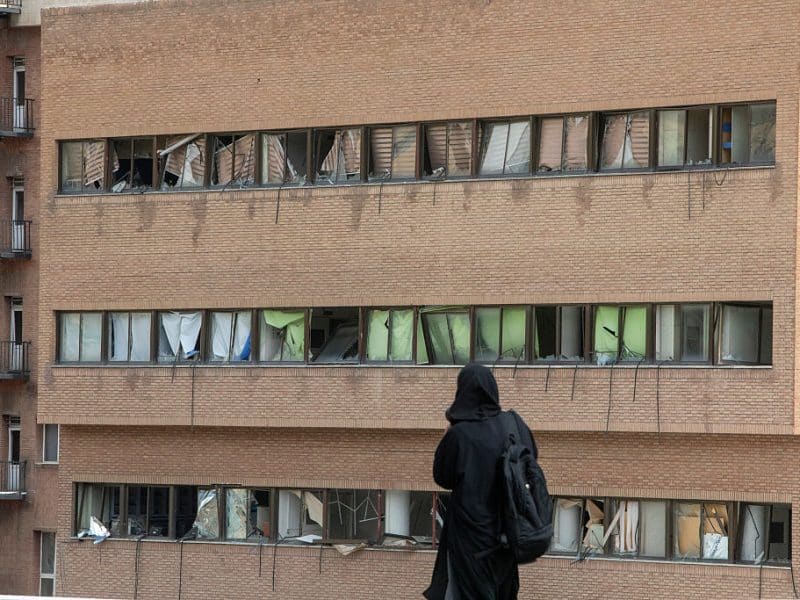
US-Israeli Strikes on Iran’s Universities Signal Higher Ed No Longer Off-Limits
Iran’s academia will bear significant costs from indiscriminate airstrikes on its prestigious universities launched by the United States and Israel, even if the war comes to an end. In a country where education is one of the main pathways to success, the long-term repercussions will be grim.

The U.S.-Israeli war on mental health in Iran
After decades of undemocratic governance, economic sanctions, and information warfare by external actors, the US-Israeli war of aggression has increased the risk of mental health issues among Iranians and the intergenerational transmission of trauma
“Nuance, accuracy and reason are often lost”: What the media gets wrong about Iran
Having lived in Iran and later covered it from elsewhere, including Britain and now the US, I have seen how reliance on clichés and stale terminology affects the way some mainstream outlets cover the country. You can read commentary today and, if you removed the date, it could easily have been written 10 or 15 years ago.